


In the current perfume industry, a sometimes worrying divide exists between the increasingly standardized and draconian universe of olfactory tests and the often very sophisticated work carried out in the territories of perfume brands: in-depth semiotic analyses, brand funds, writing brand books, etc.
As a firm that focuses on strategic studies, we have the opportunity to work in semio and in quality on olfactory approaches very early in creation, but rarely on how the olfactory experience influences the image of a perfume brand.
However, we have had the opportunity to do so by supporting a French niche brand that has enjoyed spectacular success in the United States for several years. The initial intuition was that the brand story, although worked very thoroughly, did not cover all the dimensions that made the offer a success. Moreover, while the fundamental values were clear internally, their formulation by the communication agency did not make them sufficiently obvious, embodied or differentiating on the market.
Faced with this observation, our client took the risk of going back to basics: listening to the consumer, understanding what juices really make you feel, and feeding their story and brand promise based on these lessons.
Unlike a classic brand fund study, which would have started from the brand's imagination and then went down into the various activations of the mix, we put the brand “on the side” to start from the direct experience with the olfactory universe of the range.
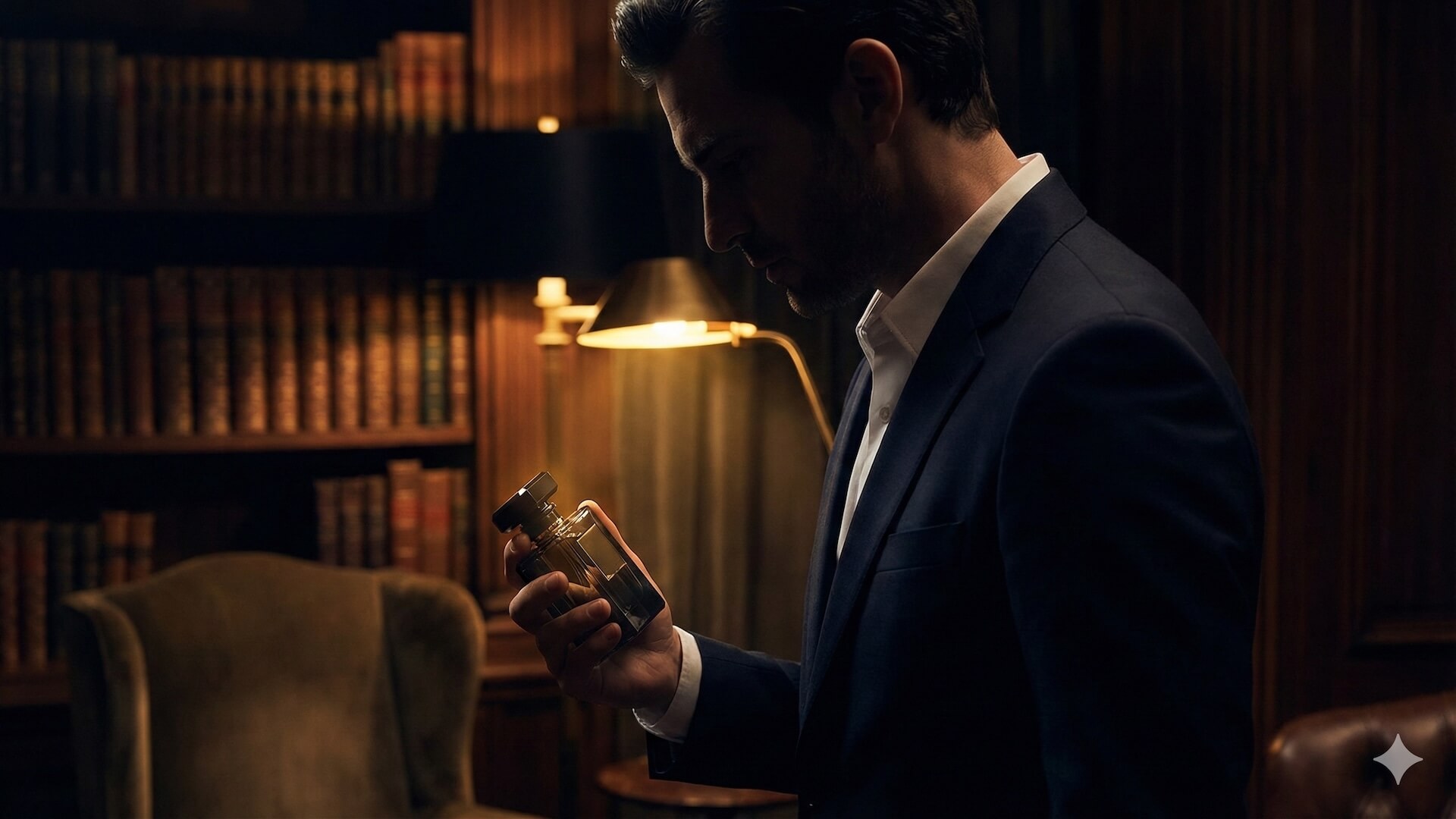
In Focus Groups (Los Angeles and New York), we plunged the respondents directly into the world of some of the brand's iconic fragrances: smell the juices, see the bottles, touch them... The participants thus freely explored the creations, expressed their first impressions, and built their own associations and representations. The in-depth qualitative work was built from there, in a sensory and then projective way but always from the “product”, in particular by exploring the qualities and values of the creator, imagined from these different references. This protocol provided a precise sensory language: the words, images and associations spontaneously generated during the quali group constitute authentic vocabulary, inspiring for content strategy and artistic direction.
The “hidden” values that have emerged have transformed the understanding of the brand and opened the way to new communication territories:
Once the free exploration was carried out, we introduced the elements of context: history, positioning, ambitions. This sequence made it possible to precisely identify the differences between “natural” perception and brand intent, to identify dissonances and opportunities for alignment.
The quantitative phase made it possible to objectify these approaches by projecting them into the competitive landscape.
A key challenge of the project was the joint work between our qualitative and quantitative teams to transform deeply sensory and complex insights into clear, appropriate and actionable quantitative items. The aim was to make perceptions and representations such as the sophisticated mystery, the intentionality of the construction and the olfactory evolution, the embodied character of each fragrance or The olfactory creative genius, with respondents who did not have access to the product at the time of the test. This translation stage ensured continuity between qualitative exploration and quantitative validation, guaranteeing results that were both robust, usable and strategically actionable.
Comparative analysis reveals, for example, that the brand actually preempts certain key dimensions — sophisticated mystery and creative excellence — with a significant lead over its direct competitors.
On the other hand, other territories identified as qualified remain underexploited or insufficiently clarified in market perception. This mapping makes it possible to identify priority levers to strengthen differentiation: to enhance the dimensions already acquired while structuring communication around emerging territories revealed by the reverse protocol.
We can see how double reading — qualitative (revelation) and quantitative (validation and positioning) — has made it possible to transform insights into actionable strategies, up to the redesign of the brand book: the brand now has a precise roadmap to optimize its positioning, based on its authentic strengths while investing in the differentiating territories identified.
This approach is directly transferable to other contexts where perceived authenticity is a critical issue: niche brands in beauty, spirits or confidential fashion; established brands repositioning seeking to regain their truth; multicultural contexts where implicit codes take precedence over explicit discourses.
Collaborative intelligence between qualitative and quantitative teams is the core of this added value: it makes it possible to move from revealed intuition to objectified intelligence, from authentic insight to measurable differentiating strategy.
L'intelligence artificielle offre aux marketeurs des outils plus intelligents pour analyser le comportement des consommateurs, optimiser les dépenses et adapter les campagnes en temps réel, conduisant à des stratégies à la fois très ciblées et incroyablement efficaces.


L'intelligence artificielle offre aux marketeurs des outils plus intelligents pour analyser le comportement des consommateurs, optimiser les dépenses et adapter les campagnes en temps réel, conduisant à des stratégies à la fois très ciblées et incroyablement efficaces.
L'intelligence artificielle offre aux marketeurs des outils plus intelligents pour analyser le comportement des consommateurs, optimiser les dépenses et adapter les campagnes en temps réel, conduisant à des stratégies à la fois très ciblées et incroyablement efficaces.
Artificial intelligence gives marketers smarter tools to analyze consumer behavior, optimize spend, and adapt campaigns in real time, leading to strategies that are both highly targeted and incredibly effective.
%202.webp)
By combining human expertise with advanced AI capabilities, we provide insights that are both accurate and actionable.