


Semiotics now occupies a real place in the analysis of markets with a “high symbolic dose” such as perfumery. It makes it possible to decode the signs, codes of expression, stories and territories of promise that make up the identity of brands and guide consumer choices. However, this approach comes up against a structural limit: the impossibility of analysing very extensive corpora.
In its traditional practice, semiotic analysis remains manual and artisanal. An expert can handle a few dozen references with the required finesse, but this manual approach can become limiting: faced with the challenges of large-scale consumer markets or globalized consumption markets, which are in constant evolution, the analysis of a few references — even if carried out perfectly — cannot be enough to grasp overall dynamics, significant recurrences, or emerging opportunities.
The perfumery industry illustrates this challenge well: with tens of thousands of references active on global markets, it is becoming impossible to map codes, to identify the available territories, or to detect weak signals at the correct scale.
The case arose for us with a request concerning the concept of intensity in perfumery. With its variants (elixir, essence...), this concept now covers a significant part of flankerization as well as olfactory innovation. For a brand that wishes to position itself in this territory — or to differentiate itself from it —, it is essential to be able to have an exhaustive map of existing expressions, an identification of codes that have already been preempted, and a detailed analysis of opportunities for differentiation. This strategic intelligence can only emerge from a systematic and thorough analysis, which is impossible to conduct manually in a market with thousands of active references.
It is precisely this challenge that we have chosen to take up with the development of BELA.
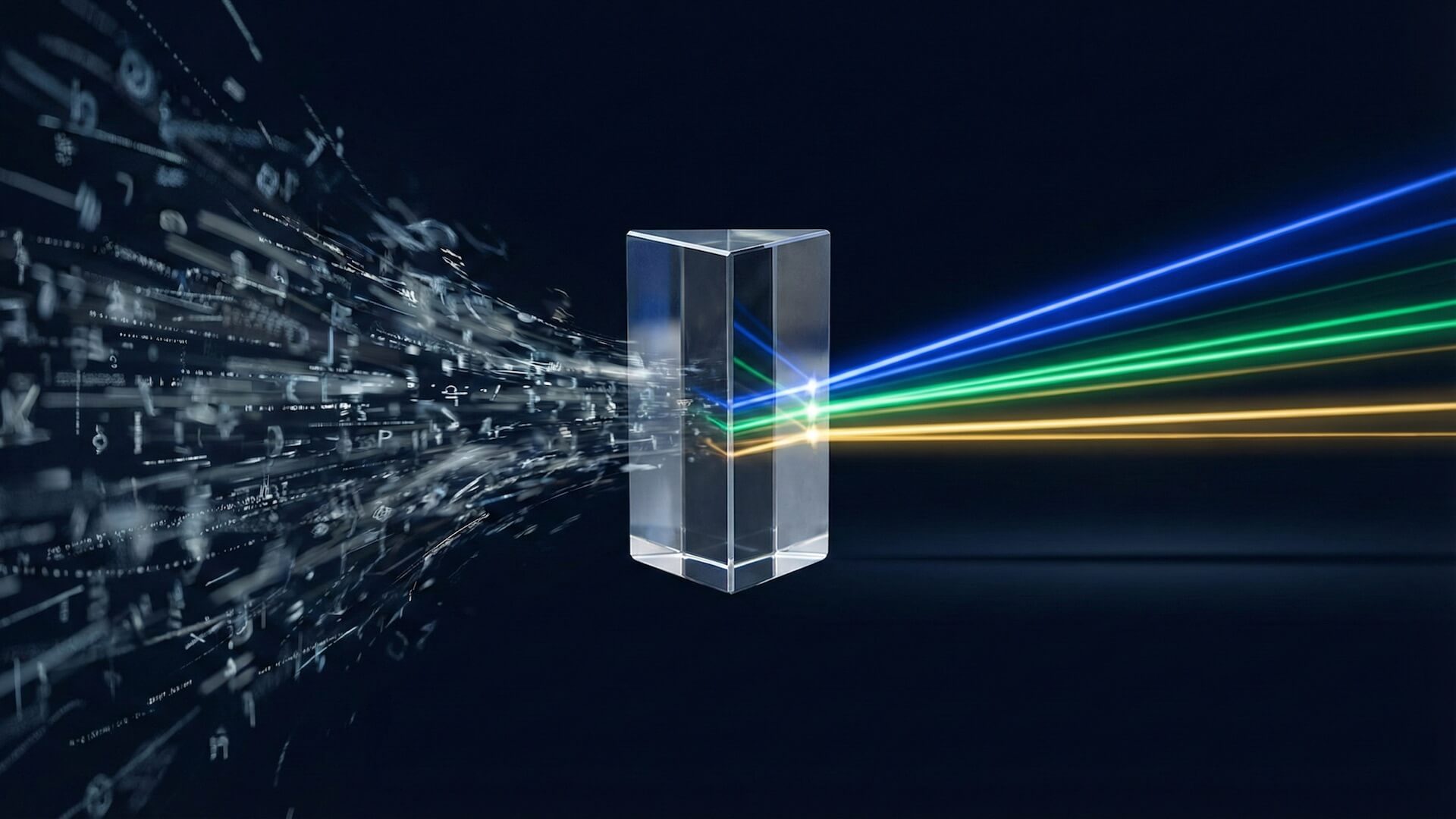
BELA (Brand Expression & Language Architecture) is the methodological response we provide to the scale limitation of classical semio. This approach combines human expertise with the systematic analysis capabilities of artificial intelligence, making it possible to process massive corpora while maintaining the interpretative precision and depth specific to the discipline.
The method is based on an augmented intelligence architecture that combines four complementary layers. First, a technical infrastructure capable of ingesting, structuring and enriching thousands of descriptive and visual references of perfume references. Then a layer of specialized analysis agents who generate semio metadata according to description and interpretation grids calibrated by our experts. Then, an exploration interface that allows you to navigate, filter and cross this enriched data according to various analytical axes. Finally, a collaborative environment where the semiotician expert can question, refine and interpret the results with the assistance of a specialized conversational agent.
This architecture preserves human judgment at the heart of analysis. AI does not automate interpretation: it systematizes collection, structures exploration, and amplifies the analytical capacity of the expert. The final interpretation, the construction of meaning and the formulation of strategic recommendations remain strictly human.
To validate this approach, we built a database of 9,000 perfume references, structured around essential metadata: brands, descriptions, visuals, olfactory families, positioning, launch years... This database, fed by targeted scraping and systematic enrichment, covers all segments (luxury, niche, mainstream) and major geographic markets.
The intensity analysis followed the four-step methodology documented in our BELA approach, which made it possible to isolate a corpus of 908 references explicitly linked to the concept of intensity. On this basis, we defined the relevant interpretation grids: claimed functional and emotional benefits, ingredient descriptions, metaphorical territories mobilized, associated visual codes, and characteristic vocabulary. These grids, calibrated by our semiotician, guided the automated generation of enriched metadata for each reference in the corpus.
The third enrichment phase made it possible to transform each reference into a structured analytical sheet. Finally, the activatable feedback phase mobilized our specialized AI assistant to explore patterns, cross analytical dimensions, and produce strategic summaries in the form of maps, timelines and operational recommendations.
This methodology has produced analyses that are unprecedented in their depth and comprehensiveness, both “synchronic” and “diachronic”.
The systematic exploration of the 908 “intensity” references has in fact revealed a map structured around two fundamental axes: the source of power (elemental/primal vs. magic/transformative) and sensory manifestation (impact/shock vs. envelopment/heat).
This matrix with four quadrants made it possible to precisely position each expression of intensity and to identify saturated versus emerging territories. For example, the quadrant “elemental force + impact” (intensity as the raw power of nature) appears largely preempted, while the “magic force + envelopment” (intensity as textured and mysterious sensuality) territory (intensity as textured and mysterious sensuality) reveals opportunities for differentiation.
Another lesson: the analysis of a timeline over several decades of olfactory launches made it possible to highlight three distinct phases in the evolution of intensity codes: the era of precursors (before 2000), centered on the concentration and richness of ingredients; the era of intense flankers (2000-2010), focused on amplification and nocturnal use; and the contemporary era of innovation (2015-2024), characterized by the emphasis on innovation technological (extraction processes, maturation of ingredients, “facettization” of olfactory components) in the service of a disruptive sensory experience.
These insights, made possible by the systematic analysis of thousands of references, offer brands actionable strategic intelligence: understanding the dynamics of market changes in the long term and in the short term, detection of weak innovation signals, mapping of competitive codes, identification of available territories,.
The experimentation conducted on fragrance intensity validates the potential of BELA as a very exciting methodological evolution of the semiotic approach, and it is directly transferable to all markets where the analysis of signs and expressive codes on a large scale is a strategic challenge.
In beauty and cosmetics, she is able to analyze emerging areas of innovation — anti-aging, clean beauty, inclusiveness — on massive product corpora, revealing preempted codes and positioning opportunities. In fashion and luxury, it can map weak signals of repositioning, identify new statutory codes, or decode the evolution of brand imaginations on a large scale.
The food sector offers equally rich perspectives: analysis of new nutritional, sustainable or sensory territories; mapping of codes of authenticity or naturality in several markets; identification of breaks in the imaginations and stories around “eating well”... In mobility, the approach can reveal the evolution of statutory, ecological or technological codes that redefine brand territories in the automotive industry.
This enhanced capacity for analysis does not replace semiotic expertise: it multiplies it. It maintains interpretative finesse while removing scale constraints, thus opening up new territories of strategic intelligence for brands that operate in dense and constantly evolving competitive worlds.
L'intelligence artificielle offre aux marketeurs des outils plus intelligents pour analyser le comportement des consommateurs, optimiser les dépenses et adapter les campagnes en temps réel, conduisant à des stratégies à la fois très ciblées et incroyablement efficaces.


L'intelligence artificielle offre aux marketeurs des outils plus intelligents pour analyser le comportement des consommateurs, optimiser les dépenses et adapter les campagnes en temps réel, conduisant à des stratégies à la fois très ciblées et incroyablement efficaces.
L'intelligence artificielle offre aux marketeurs des outils plus intelligents pour analyser le comportement des consommateurs, optimiser les dépenses et adapter les campagnes en temps réel, conduisant à des stratégies à la fois très ciblées et incroyablement efficaces.
Artificial intelligence gives marketers smarter tools to analyze consumer behavior, optimize spend, and adapt campaigns in real time, leading to strategies that are both highly targeted and incredibly effective.
%202.webp)
By combining human expertise with advanced AI capabilities, we provide insights that are both accurate and actionable.